The first chilly evening of November sends a lot of homeowners out to the woodpile. You grab an armful of split oak, carry it toward the hearth and never think twice about what’s tucked between the logs. For many families, that’s their first close encounter of the year with a black widow. If you’ve been researching spider pest control Norfolk VA homeowners can count on before fireplace season, you’re in the right place.
Here at Bug Masters, we’ve served families across Norfolk and the rest of Hampton Roads since 2011, and every fall we see the same pattern. Black widows don’t go looking for people. They settle into quiet, cluttered spots, and trouble starts when someone reaches in without looking.
Below, we’ll cover why black widows shelter in local yards this time of year, where they hide and how to spot one. We’ll also share smarter firewood and storage habits, explain how professional treatment helps, and answer the questions we hear most.
Virginia is home to two black widow species, the southern black widow and the northern black widow, and Virginia Cooperative Extension notes that both live in the state. Our technicians find them regularly throughout Hampton Roads.
Part of the reason November feels like black widow season is our coastal climate. The water keeps temperatures mild, and the first frost here often doesn’t arrive until late November or even December. That means spiders tend to stay active later in the year than they do farther inland.
It’s a common myth that spiders march indoors to escape the cold. Most black widows prefer to stay put in sheltered spots outdoors and in outbuildings. What changes in fall is our routine: we pull wood off the pile, rake leaves, haul holiday decorations out of the shed and rearrange the garage, putting our hands right where these spiders spent the summer.
Humidity adds to the picture. Many local homes have crawl spaces and detached sheds, and damp, dark storage areas attract the insects black widows eat. That’s why the fall spider control Hampton Roads homeowners schedule this time of year focuses on the spaces families are about to start using again.
Black widows want shelter, darkness and a steady supply of insects. The CDC’s guidance on venomous spiders lists woodpiles, sheds, garages, crawl spaces and stored items among their favorite hiding places, and it describes these spiders as shy rather than aggressive. Most bites happen when someone accidentally presses against one.
A woodpile is close to perfect black widow habitat. The gaps between logs stay dark and dry, crickets and beetles shelter there, and a stack untouched since spring hasn’t been disturbed in months. The bottom rows and the side facing a fence or wall usually hold the most webs.
Look behind lawn mowers, under shelving, inside stacked flowerpots, beneath workbenches and along the bottom edge of the garage door. Cardboard boxes sitting on the floor are a favorite. When you pull out holiday bins in November, you may be the first person to move them since last winter.
Check meter boxes, the undersides of outdoor furniture, crawl space vents and any gloves or boots left in the garage. Slipping a hand into a glove that’s been sitting on a shelf for months is one of the classic ways people get bitten, so shake everything out first.
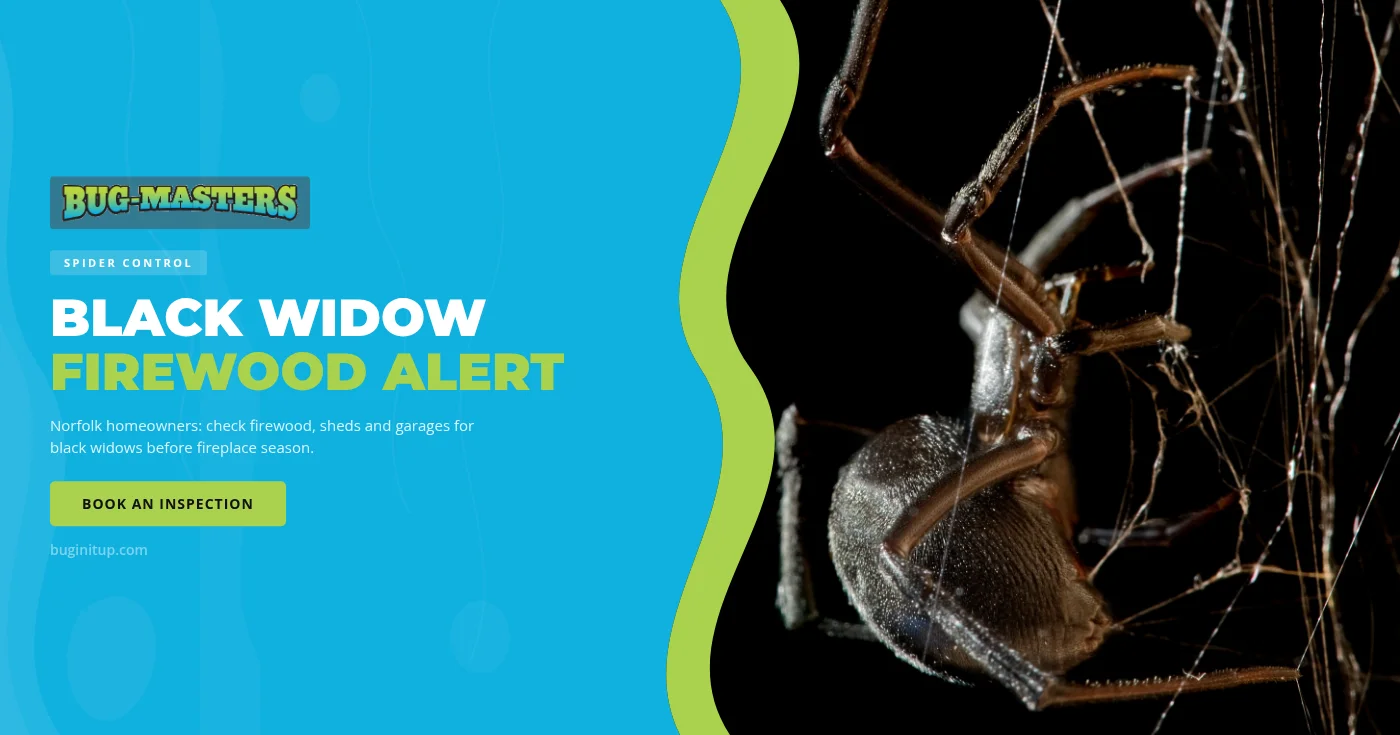
The adult female is the spider most people picture. She’s glossy black with a round abdomen about half an inch long, and her legs span roughly an inch and a half. Her signature mark is a red or orange hourglass on the underside of her abdomen, which you can often see as she hangs upside down in her web. On the northern black widow, that hourglass is frequently split into two separate marks.
Males and young spiders look different. They’re smaller and lighter, sometimes with red, white or tan markings, so not every black widow fits the textbook image.
Black widows don’t spin neat, wheel-shaped webs. Theirs are irregular and tangled, built low to the ground in dark, undisturbed spots, with silk that feels surprisingly strong when you brush through it. Nearby you may find tan, papery, roughly round egg sacs about half an inch across. Each one can hold hundreds of eggs, so a single overlooked sac can mean many more spiders next season.
Other dark spiders, including false widows, are often mistaken for black widows. They usually lack the crisp red hourglass, but identification isn’t always easy from a distance. If you’re unsure, leave it alone and let a professional take a look.
A few simple habits make a big difference once you start bringing wood indoors:
One rule matters above all: never spray firewood with pesticide. Burning treated wood can release harmful fumes into your home. Any treatment belongs around the woodpile area, not on the logs you plan to burn, and that’s work best left to trained technicians.
These steps won’t eliminate every spider, but they greatly reduce the odds of an unwelcome surprise on your hearth.
Good firewood habits cover one entry point. The rest of your home and outbuildings deserve attention too, especially as you spend more time in the garage this season.
Replace worn weatherstripping along the bottom of garage and shed doors, caulk gaps around pipes, cables and window frames, and repair torn screens on windows and crawl space vents. Small openings are all a spider needs.
Clutter is the biggest factor when it comes to keeping spiders out of a shed in winter. Store items in sealed plastic bins instead of cardboard, keep things off the floor on shelving and leave a little space between stored items and the walls so you can see behind them. Sweep corners, knock down old webs with a broom, and clear leaf piles and yard debris away from your foundation.
Damp crawl spaces and garages draw in the insects spiders feed on. Fixing leaks, improving ventilation and running a dehumidifier where needed can help. For stubborn dampness under the house, our moisture control service addresses the conditions that attract pests in the first place. Switching porch bulbs to yellow “bug” lights may also reduce the flying insects that lure spiders to your doorways.
DIY steps go a long way, but they can’t reach every crack, crawl space and cluttered corner. When you call a spider exterminator Norfolk VA families recommend, here’s what a visit with us looks like.
We start by walking your property, including woodpile areas, sheds, garages, crawl spaces, eaves and entry points, to find where spiders are living and what’s feeding them. Then we treat the places they hide and travel, such as foundations, door thresholds, garage perimeters and outbuilding corners. We never treat the firewood itself.
Our web-out service is thorough spider web removal for eaves, porches, garages and sheds. Clearing webs and egg sacs helps cut down next season’s population and makes new activity easier to spot.
Spiders follow their food. Our general pest control plans keep the insects that attract spiders in check year-round, giving black widows less reason to settle in.
Here at Bug Masters, every technician wears a body camera for your peace of mind, and we offer same-day service with 24/7 availability when something can’t wait. Our team includes Master Tech Jon Tari, and we’re proud members of the NPMA and VPMA.
Often, yes. Our mild coastal climate can keep black widows active well into November. As temperatures fall, they slow down and tuck deeper into sheltered spots, but they don’t simply die off. Adult females and egg sacs can survive winter in woodpiles and sheds.
They can. A spider or egg sac on a log can ride inside with you. Bringing in only a day’s worth of wood and inspecting each piece lowers the odds considerably.
Bites are uncommon and deaths are very rare, but the venom can cause real discomfort. According to the CDC, a bite may feel like a pinprick, followed by muscle pain and cramping, sweating or nausea. Wash the area with soap and water, apply a cool compress, seek medical care and contact Poison Control for guidance.
It depends on activity and how the space is used. Many homeowners do well with a quarterly plan, while properties with heavy clutter, woodpiles or past sightings may benefit from more frequent visits. We’ll recommend a schedule after we inspect.
We choose products and methods with families and pets in mind, focusing on cracks, perimeters and hiding spots rather than open living areas. Our technicians explain any prep steps and how long to keep kids and pets away from treated areas.
Fireplace season should be about warm evenings, not surprises in the woodpile. Stack firewood away from the house, wear gloves, cut the clutter in your shed and garage, and watch for messy webs and tan egg sacs. When you’d rather hand the job to professionals, our spider pest control Norfolk VA service covers inspection, targeted treatment and web-outs.
Bug Masters has protected homes across Hampton Roads since 2011, from Virginia Beach and Chesapeake to Portsmouth, Suffolk, Hampton and Newport News. We’re WDI Certified and committed to quality over quantity on every visit. Contact Bug Masters today to schedule your inspection before you light the first fire of the season.
We can. Here at Bug Masters, we’ve been handling spider problems for homeowners across Hampton Roads since 2011, and black widows in woodpiles, sheds and garages are some of the most common calls we get each fall. Our spider pest control service is built around finding where these spiders live and removing the conditions that keep them coming back.
Here’s what you can expect when you call us:
Every one of our technicians wears a body camera, giving you peace of mind about who’s on your property and what’s being done. We’re members of the NPMA and VPMA, WDI Certified, and we take a quality-over-quantity approach to every visit. We also offer in-house financing and reasonable pricing, so protecting your home doesn’t have to wait.
We proudly serve Virginia Beach, Norfolk, Chesapeake, Portsmouth, Suffolk, Hampton and Newport News. Reach out to our team to schedule your inspection before fireplace season gets into full swing.