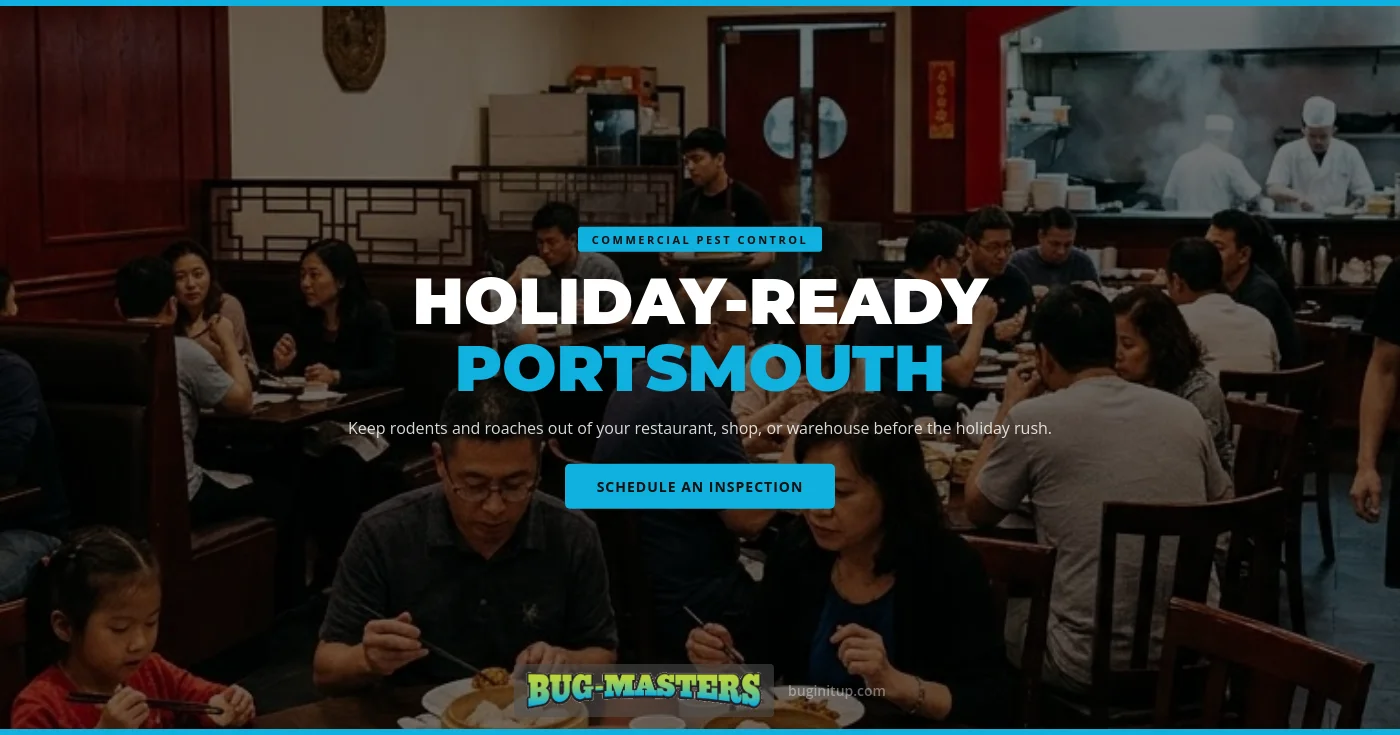
The first cool evenings of fall feel like a relief after a long, humid summer. For restaurants, retail shops, and warehouses, though, they mark the start of a busy season for pests. As temperatures drop, mice, rats, and cockroaches go looking for warmth, food, and shelter, and a building with a kitchen, a stockroom, or a loading dock checks every box. That makes fall the right time to think about commercial pest control in Portsmouth, VA, before the holiday rush arrives.
Here at Bug-Masters, we help restaurants, shops, and warehouses across Portsmouth and the rest of Hampton Roads stay ahead of seasonal pests. We see the same pattern every year. Businesses that prepare in September and October have a quieter holiday season than those that wait until droppings show up in dry storage. Good fall pest control for businesses means closing the door before pests arrive.
Below, we cover why fall brings more pest pressure and which pests to watch for. We also look at the high-risk areas inside commercial buildings, how exclusion work keeps pests out, and what a professional plan should include so you’re ready for inspectors and holiday customers alike.
Rodents and many insects respond to the change of seasons well before the first frost. In our area, October highs typically sit in the low-to-mid 70s and nights dip into the 50s. The first real cold snaps often arrive in late October or November. Those cooler nights are the cue for mice and rats to move toward buildings with steady heat, and few places are warmer than a commercial kitchen.
Local geography adds to the pressure. The city sits along the Elizabeth River, with port and rail infrastructure, the Norfolk Naval Shipyard, and heavy freight traffic. Waterfronts, rail lines, and sewers give rodents places to live and corridors to travel. Many older brick buildings in Olde Towne and along the High Street corridor have shared walls, aging mortar, and patched utility openings. All of these can leave small gaps that pests use to get inside.
Weather and inventory matter too. Late summer and early fall are the peak of hurricane season, and heavy rain or flooding can push rats out of sewers and waterfront areas toward dry shelter. Meanwhile, warehouses and retail backrooms fill with holiday pallets and cardboard in October and November. That creates more places to hide and nest just as foot traffic, fall events, and inspections pick up.
Not every pest is a fall problem, but a few show up in commercial buildings like clockwork once the weather turns.
Mice and rats are the headline fall invaders. According to the Centers for Disease Control and Prevention, rodents can carry diseases such as hantavirus, salmonellosis, and leptospirosis. The CDC recommends a “seal up, trap up, clean up” approach. Public health and extension guidance commonly notes that a house mouse can squeeze through a hole about the size of a dime. A Norway rat can fit through an opening of around ½ inch. That’s why commercial rodent control starts with finding gaps most people would never notice.
German cockroaches are the species most often found in commercial kitchens. They breed quickly and hide in warm cracks near equipment. They can also contaminate food and trigger allergies and asthma in sensitive people. American cockroaches are the larger reddish-brown roaches, and they tend to move in from drains, sewers, and crawl spaces. Our humid coastal climate keeps both active for most of the year, so commercial cockroach control isn’t something to pause when summer ends.
Pantry beetles and moths can ride in on bulk dry goods. Spiders, stink bugs, and other occasional invaders look for cracks around windows and doors as nights cool. They’re usually less serious than rodents or roaches, but in a dining room or retail display they still cost you customer confidence.
Pests follow food, water, and shelter, so the same few areas tend to show activity first. When we inspect a commercial property, these are the spots we study most closely.
Warmth, moisture, and food debris all come together behind and under cooking lines, dish machines, ice machines, and soda systems. Floor drains, wall voids behind equipment, and gaps around plumbing are favorite cockroach hiding spots. Effective restaurant pest control often comes down to the few inches behind the fryer that rarely get moved.
Dry storage, stockrooms, and retail backrooms are where rodents like to nest. Cardboard, paper goods, and pallets pushed against walls give mice cover and nesting material. Store products on shelving off the floor and a few inches from walls. This makes inspection easier and removes hiding places.
Dumpster pads, grease bins, and recycling areas attract rats from surrounding properties, especially along alleys and shared service lanes. Loading docks are the biggest open door in many buildings. Dock doors that stay up during long deliveries, worn dock seals, and gaps under roll-up doors let rodents walk right in. For warehouses and docks, we check seals, door bottoms, and lighting that draws insects. We also look at how close the dumpster sits to the building.
Spraying a building won’t keep pests from coming back if the openings are still there. Exclusion means physically sealing the gaps pests use to get in. It is the longest-lasting part of pest exclusion for businesses. Fall is the ideal time to do it, before rodents settle in for winter.
Common entry points we seal or recommend repairing include:
Materials matter. Rodents can chew through foam, rubber, and wood. In high-pressure areas, metal mesh, sheet metal, hardware cloth, and sealants made for exclusion are generally a better fit. Moisture control plays a part as well, because leaks and damp crawl spaces draw cockroaches and give rodents water.
Exclusion isn’t a one-time fix. Hand trucks bump doors, sweeps wear out, and contractors drill new holes for cables. A quick seasonal check of your seals keeps the work holding up.
For food businesses, pests are more than a nuisance; they’re a compliance issue. The FDA Food Code says food establishments must keep their premises free of insects, rodents, and other pests and control them through routine inspections. It also requires outer openings like doors and screens to be protected. Virginia’s Food Regulations are based on the Food Code, and the Virginia Department of Health enforces them through its local health districts. Rules can change, so confirm current requirements with your health district. Live or dead pests, droppings, or unprotected openings are the kinds of findings that can lead to violations.
FDA-regulated food warehouses generally fall under current good manufacturing practice rules that also call for keeping pests out. Retail shops without a kitchen face a different risk: a mouse in a holiday display can end up in an online review fast.
A few habits help keep you inspection-ready:
If a health inspection is on the calendar, schedule a service visit a week or two ahead. That way any issues can be addressed before the inspector arrives.
A strong commercial plan is built around Integrated Pest Management, or IPM, an approach promoted by the EPA and Virginia Cooperative Extension. IPM doesn’t rely on routine spraying. It combines inspection, monitoring, sanitation, exclusion, and targeted treatment only where it’s needed. Here at Bug-Masters, our commercial service typically includes:
Frequency depends on your business. Many restaurants schedule monthly service. That’s a common industry practice rather than a fixed requirement. Lower-risk retail spaces may do well with fewer visits. Warehouses with heavy inbound freight may need extra attention during holiday stocking. When comparing Hampton Roads commercial pest control providers, ask whether technicians hold pesticide applicator certification through the Virginia Department of Agriculture and Consumer Services. Virginia requires this certification for commercial application.
Cooler nights, shrinking outdoor food sources, and fall storms push rodents toward warm buildings with steady food. Commercial properties with kitchens, stockrooms, and open dock doors are prime targets. That’s why we recommend exclusion work before winter.
It depends on your risk level. Monthly service is common for restaurants and food handlers, while offices and retail stores may need visits less often. We tailor the schedule to your building, your pest history, and the season.
Not indoors. German cockroaches live inside heated buildings year-round, and American cockroaches stay active in warm drains and crawl spaces. Winter is no reason to pause treatment.
Close doors between deliveries when you can and maintain dock seals and door bottoms. Use lighting that draws fewer insects and keep pallets away from the dock edge. Exterior rodent monitoring along the dock helps too. Strip curtains or air curtains can help where doors must stay open.
The holidays are when your business can least afford a pest problem, and fall is when pests are most determined to get inside. Seal entry points and tighten up sanitation in high-risk areas. Put a professional plan in place now so you can focus on customers instead of droppings and roach sightings.
Bug-Masters serves businesses throughout Virginia Beach, Norfolk, Chesapeake, Portsmouth, Suffolk, Hampton, and Newport News. We know the pest pressures that come with life along the water. If you want commercial pest control Portsmouth VA restaurants, shops, and warehouses can count on this season, contact Bug-Masters to schedule your inspection and get ahead of the holiday rush.
Fall is when mice, rats, and cockroaches start pushing indoors. For restaurants, shops, and warehouses, that timing lines up with holiday inventory, bigger crowds, and more inspections. Here at Bug-Masters, we help businesses get ahead of that pressure. Our goal is to stop pests before they move in, not after a customer or inspector spots them.
Our fall commercial service focuses on:
We build every plan around Integrated Pest Management, which combines inspection, sanitation feedback, exclusion, and treatment only where it’s needed. Restaurants often choose monthly visits. Retail spaces and offices may need fewer. Warehouses may want extra attention while holiday freight is coming in. We tailor the schedule to your building and your pest history.
We serve businesses across Virginia Beach, Norfolk, Chesapeake, Portsmouth, Suffolk, Hampton, and Newport News. We know how waterfront locations, older brick buildings, and fall storms affect pest activity in our region. The sooner the gaps are sealed, the quieter your holiday season tends to be.
Want the full checklist of high-risk areas, entry points, and inspection-readiness tips? Read our complete guide: Fall Commercial Pest Control in Portsmouth, VA: Pest-Proof Your Business Before the Holiday Rush.